The SIMU Group at the Laboratory of Atmospheric Physical Chemistry (LPCA) has contributed to a major publication in the prestigious Journal of Hazardous Materials. The article, entitled “Laboratory Investigation of Asphalt-Emitted VOCs: Oxidation, Ultrafine Particle Formation, and Urban Air Quality Implications,” is the result of an international collaboration.
A Study at the Heart of Urban Pollution
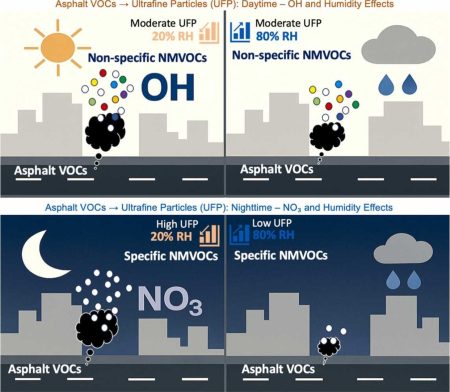
Conducted in partnership with IMT Nord Europe, Arizona State University (Tempe, USA), UCEIV, and LPCA (ULCO), this study demonstrates the key role of road asphalt in the production of ultrafine Secondary Organic Aerosols (SOAs). Through experiments conducted in the THALAMOS atmospheric simulation chamber, researchers analyzed how the oxidation of Volatile Organic Compounds (VOCs) emitted by bitumen influences air quality, while also assessing the impact of meteorological parameters such as humidity. Gaseous and particulate compounds were characterized using a wide range of analytical techniques (GC-EI-MS, SIFT-MS, LC-ESI-QToF-MS/MS, SMPS, and mini-WRAS).
Cutting-edge technology at the service of research
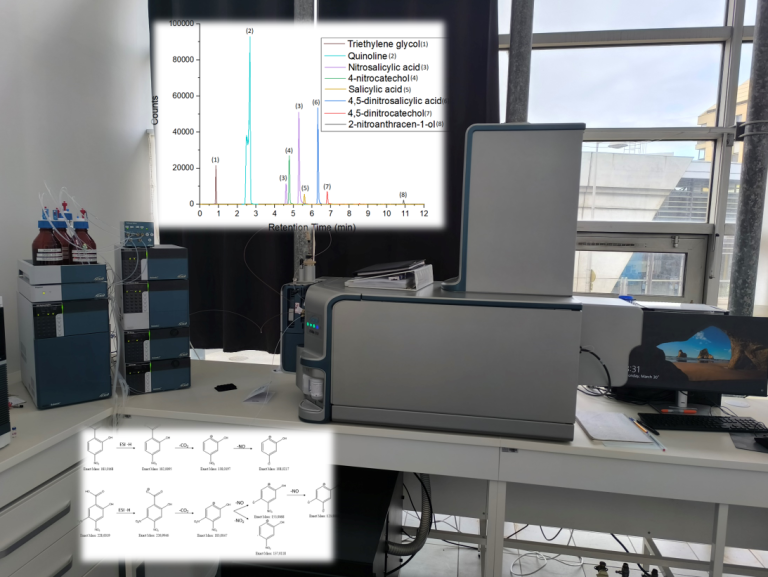
To characterize the complex chemical composition of aerosols, the LPCA and UCEIV used a high-resolution tandem mass spectrometer coupled with liquid chromatography (LC-ESI-QToF-MS/MS). Recently acquired by the chemistry department, this state-of-the-art instrument allows for the detection of ultra-trace particles and the extremely precise identification of complex organic molecules.
A major asset for students
This technology will directly benefit ULCO students. Future graduates of the Master’s program in Chemical Analysis and Industrial Environmental Control (ACCIE) will soon be trained in the use of this exceptional equipment. This opportunity guarantees them cutting-edge expertise in analytical chemistry techniques, for both research and industry.